Water from our own well: how we irrigate 19,000 trees
Domingo Bueno2 min read
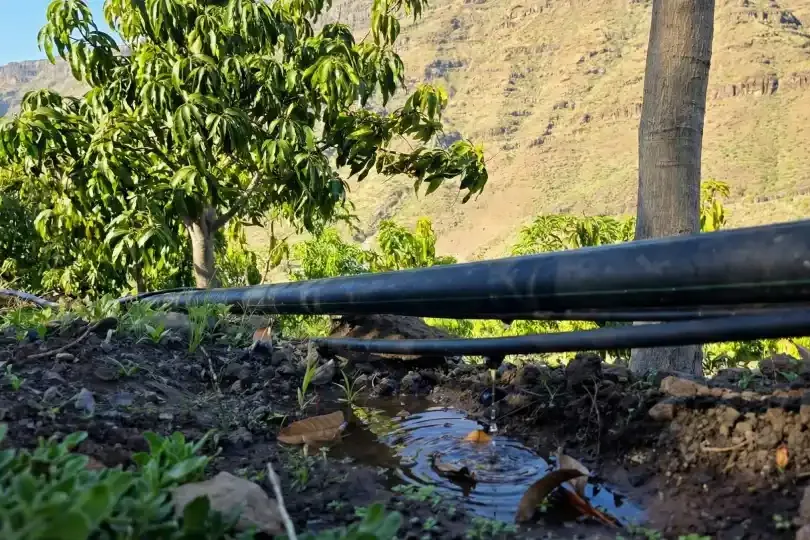
In the south of Gran Canaria, water is not plentiful. Nearly 19,000 trees are not irrigated “when we can”. We have to know where every drop comes from and how it reaches the roots, without giving too much or leaving a row short.
At Mogansol that water comes from our own well. Irrigation is automatic, with drip and mini-sprinklers, and it is meant to give each tree what it needs.
Why the well matters
We do not depend on an outside network to irrigate the planting. The well gives us direct control of the resource that keeps the farm going, and a responsibility with it: to use it carefully. In a climate like Mogán’s, water that evaporates or runs off does not come back.
Too much water does not make a better mango. It soaks soil that did not ask for it and spends a scarce resource. Too little shows in the tree, and later in the size of the fruit and in the harvest. The right amount sits in between, and it has to be watched.
Two ways of getting water to the tree
The system combines two kinds of irrigation, depending on what each area needs:
- Drip puts the water at the roots. Less is lost to evaporation, and the moisture arrives where the tree uses it.
- Mini-sprinklers complement the drip where the crop needs it. They do not replace drip. They cover another need, always under technical supervision.
Automatic does not mean unattended. Flow, timing and the state of the lines are checked. A blocked dripper in a row of trees is noticed late if nobody looks.
What irrigation has to do with the box
The mango that arrives at home depends on this water as much as on the sun or the harvest. Without measured irrigation, the tree cannot hold a crop of this quality year after year.
A farm that looks after its water can keep growing on the same soil for a long time. Behind every box is that decision as well: not to waste the drop that made the fruit possible.